

































How does Drax Technology reduce false fire alarms in an airport?
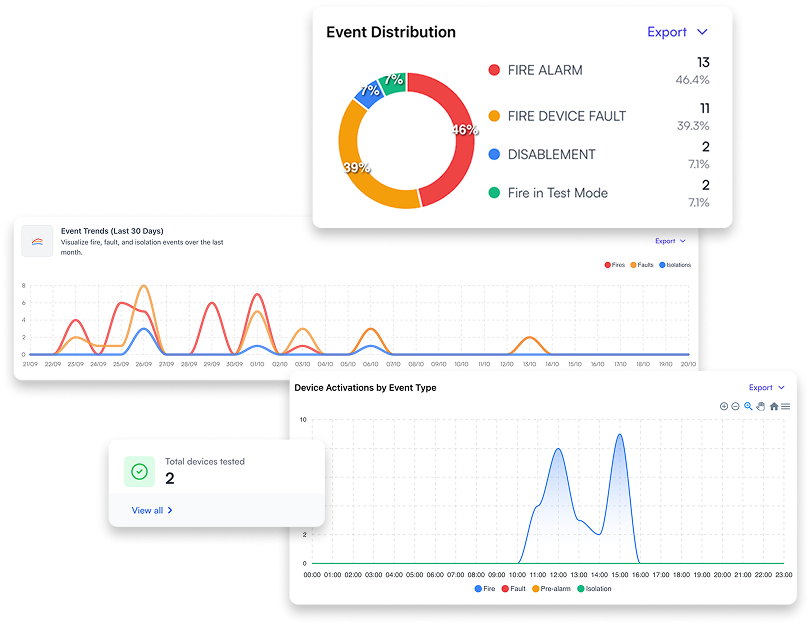
Drax Technology reduces false fire alarms in an airport by taking a proactive and predictive approach to fire system management. Instead of waiting for a faulty piece of equipment to cause an issue and reacting to it. Our intelligent platform monitors all fire safety assets and predicts when a fault may occur. This allows you to fix a minor fault before it becomes a big problem, resulting in false fire alarm reduction in the airport.
Can Drax Technology integrate with our existing fire alarm panels?
Yes, our intelligent solution is compatible with over 50 fire alarm manufacturers. It is capable of interlinking fire safety systems from multiple different alarm manufactures into one centralised solution.
How does the solution help with airport fire safety compliance?
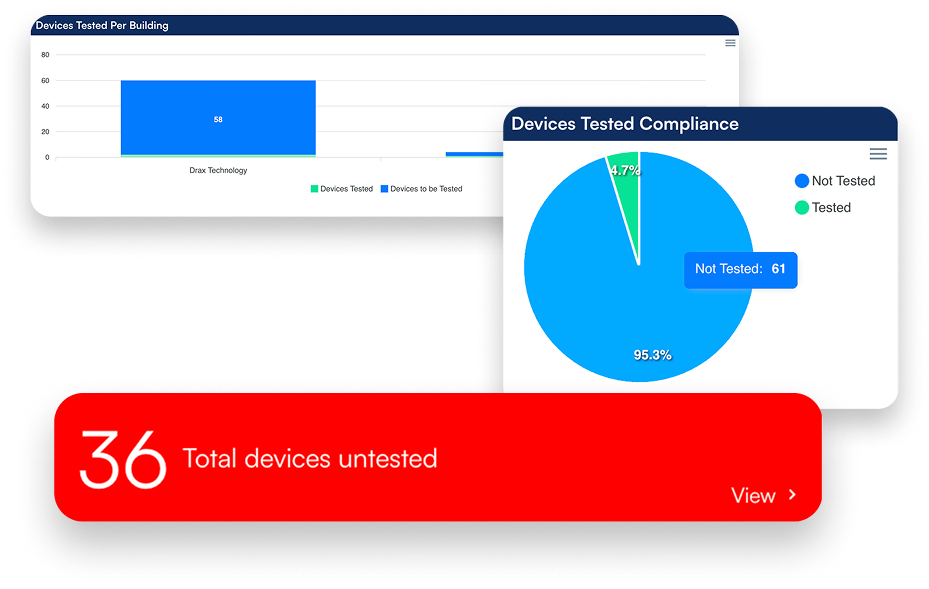
Due to its ‘always on’ nature, our intelligent platform records data from every fire event across your portfolio. This data can be accessed easily via the Compliance Hub which generates up to date, comprehensive compliance reports with a full audit trail that you can then share with third parties easily.
What is the main differentiator of Drax Technology compared to companies like Nimbus or Honeywell CLSS?
Whereas our competitors provide modular solutions that are focused on reporting and reacting to alarm events, our technology focuses on predicting and preventing alarm events via real-time fire system monitoring. This allows you to plan ahead and replace a faulty piece of equipment before it becomes an issue that can cause a false alarm or misses a genuine fire event, rather than waiting for a false alarm to flag a problem and then dealing with it after it has already caused an issue.
What is the benefit of having a single control room view for our entire airport campus?
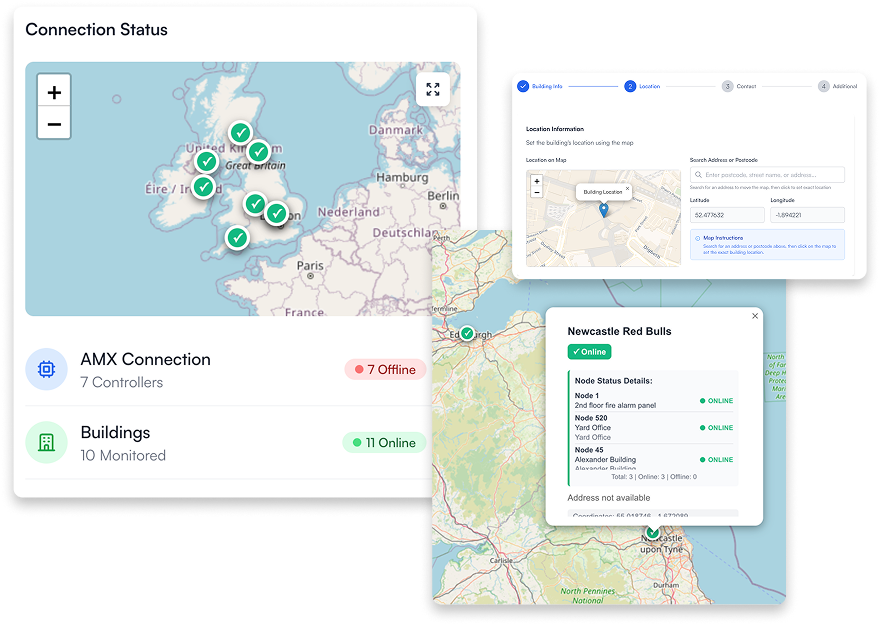
By having a single overview of the fire safety systems across your entire airport campus, you can continuously monitor the status of every fire safety asset in one place without needing to send out engineers to run constant on-site assessments. This can save both time and money by allowing you to only send engineers to provide maintenance to pieces of equipment that need it. You can also reduce the likelihood of false fire alarms due to faulty equipment that may be overlooked without continuous real-time monitoring.


